
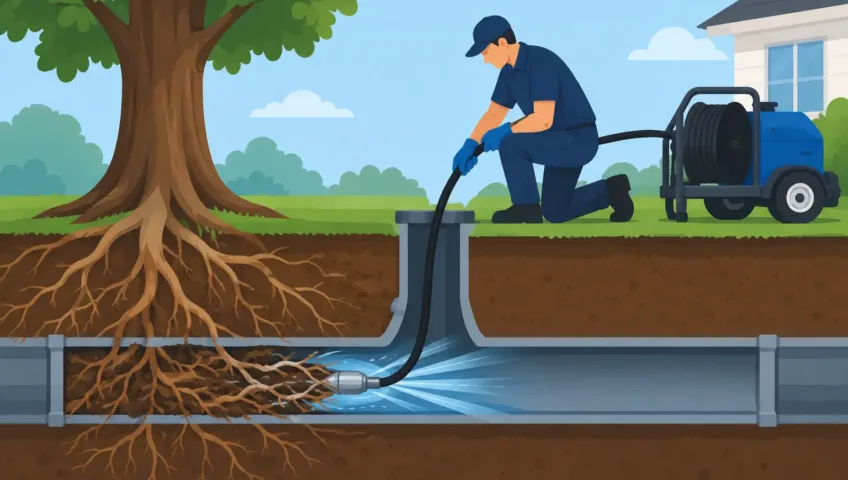
A drain that keeps backing up, especially after rain or when the washing machine empties, may have a problem beneath the garden rather than inside the house. Drain jetting for tree roots is often the quickest way to clear the immediate blockage, but it is not always the whole answer. Roots only enter a drain where there is already a gap, loose joint, crack or damaged section – so the right repair depends on what the pipe looks like once it is clear.
Don’t panic if wastewater is rising, toilets are slow to flush or an outside gully is overflowing. Tree-root blockages are common in older properties and can usually be dealt with without digging up the whole garden. The key is getting an experienced drainage engineer to clear the line safely, inspect it properly and explain what is needed before work begins.
Why tree roots get into drains
Tree roots are not drawn to healthy, watertight pipes. They find their way towards tiny amounts of moisture escaping through a defect, then grow through the opening over time. Once inside, the roots can spread into a dense mass that catches toilet paper, wipes, grease, soap residue and other debris passing through the drain.
Clay drainage pipes are particularly vulnerable because they are made up of shorter lengths joined together. Over many years, ground movement, ageing seals and nearby tree growth can open up the joints. Modern plastic pipework can also be affected if it has been cracked, poorly connected or damaged by building work.
The first warning is often an occasional slow drain. Then the issue becomes more regular: bad smells around an inspection chamber, gurgling plugholes, repeated toilet blockages or water sitting in an outside gully. If clearing the drain only solves the problem for a few weeks or months, roots should be investigated rather than simply treating each blockage as a separate fault.
How drain jetting for tree roots works
Professional drain jetting uses a high-pressure water jetting machine and specialist hose to break up and flush away blockages inside the pipe. The jetting head sends powerful water jets backwards to propel the hose through the drain while washing loose material back towards the access point.
For light to moderate root intrusion, the process can remove fine roots, silt and trapped waste effectively. A specialist root-cutting nozzle may be used where thicker root growth needs cutting back. The aim is to restore the pipe’s internal flow without excavation, giving you a working drain again as quickly as possible.
This is not the same as putting harsh chemicals down a toilet or attempting to force a domestic drain rod through a stubborn blockage. Chemicals rarely solve root ingress and may harm pipework or create a hazard for anyone working on the drain later. Aggressive rodding can also snag on roots or worsen a fragile pipe. Professional equipment should be selected and operated with the condition, material and layout of the drain in mind.
For a home or business dealing with sewage backing up, jetting can be a very practical first response. It is fast, targeted and far less disruptive than digging. For commercial premises, it can also help prevent a blocked toilet or overflowing gully from interrupting customers, staff and trading.
What jetting can fix – and what it cannot
Drain jetting removes the obstruction. It does not seal the point where the roots entered.
That distinction matters. If roots have entered through a slightly displaced joint but the drain remains structurally sound, a thorough clean followed by a suitable no-dig repair may provide a long-lasting solution. If the pipe has collapsed, fractured badly or has significant ground movement, jetting will get the water moving but the defect may need a more substantial repair.
Root growth can also return. How quickly depends on the type and proximity of the tree, the size of the defect, soil conditions and the condition of the drainage system. In some cases, routine preventative jetting is sensible while a landlord, homeowner or site manager plans repair work. In others, repeated cleaning becomes false economy because the blockage is likely to recur.
A trustworthy engineer should be clear about this. You should not be pushed into excavation when a lining repair could work, but you should not be told that a simple clean has permanently fixed a damaged drain either.
Why a CCTV drain survey is usually the next step
Once the roots and debris have been removed, a CCTV drain survey allows the engineer to see what is happening inside the pipe. A camera is fed through the drainage system, recording the condition of joints, connections and pipe walls.
This is the best way to confirm whether roots entered through an open joint, a crack, a displaced section or an older redundant connection. It can also reveal other issues hidden by the blockage, such as scale build-up, poor falls, displaced pipework or signs of collapse.
For property purchases, recurring problems or insurance discussions, a recorded survey can be particularly useful. It gives clear evidence of the issue rather than relying on assumptions from above ground. At Absolute Drainage, the focus is on explaining the findings in plain English, so you know whether the sensible next move is monitoring, maintenance, drain lining or excavation.
Repair options after roots have been cleared
The right solution should match the drain’s condition and the level of risk. A small localised defect may be repaired with a patch liner. This is a no-dig method that creates a new, sealed section inside the existing pipe, helping prevent roots from returning through that point.
Where several joints are affected or a longer run of pipe is worn, full-length drain lining may be more appropriate. A resin liner is installed within the pipe and cured to form a smooth new inner surface. It can avoid the mess and expense of lifting patios, landscaping or internal flooring, although it is not suitable for every collapsed or severely misshapen drain.
Excavation is sometimes unavoidable, particularly where a pipe has collapsed, has major structural damage or needs its alignment corrected. It is more disruptive, but it can be the most reliable long-term option when the existing pipework is beyond lining. An honest drainage contractor will set out the trade-off clearly, including access requirements, likely disruption and costs before work starts.
Can you prevent roots from blocking drains again?
You cannot control every tree near a property, and removing a tree does not always stop the problem immediately because established roots can remain in the ground. The more useful approach is to maintain the drain and deal with defects before they become a complete blockage.
If your property has mature trees close to the drainage run, consider periodic CCTV checks and planned jetting, especially if there is a history of root ingress. Keep inspection chambers accessible where possible, and avoid flushing wipes, fats, sanitary products or other material that gives roots something to trap. These items can turn minor root growth into a full sewage blockage far sooner.
Landlords and commercial property managers should pay particular attention to repeat callouts. A maintenance plan can be easier to budget for than emergency visits, customer complaints or a closure caused by an overflowing drain. Restaurants and food premises may also need regular cleaning for grease management as well as root control.
When to call for urgent help
Call for professional assistance promptly if sewage is backing up indoors, toilets cannot be used, drains are overflowing near entrances, or wastewater is affecting a business or neighbouring property. Keep children and pets away from contaminated water, avoid using sinks, toilets and appliances connected to the affected drain, and do not lift heavy inspection chamber covers unless it is safe to do so.
A blocked drain caused by roots can feel like a major disruption, but it does not automatically mean your garden needs digging up. Clearing the line, inspecting the damage and choosing a repair that suits the pipe gives you the best chance of stopping the problem properly – and getting your home or premises back to normal with minimum fuss.