
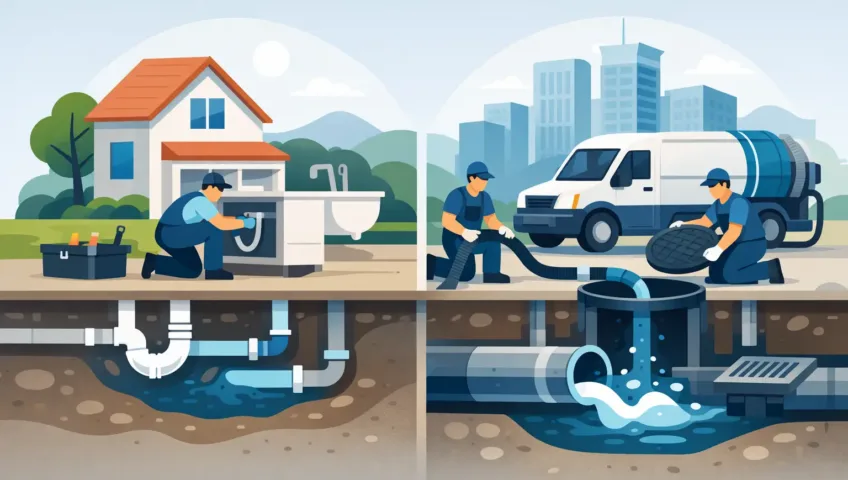
A blocked toilet before work, a gully overflowing outside a shop, or a bad smell appearing in a communal corridor can quickly turn into more than an inconvenience. Domestic and commercial drain services are there to get water moving again, identify what has gone wrong and prevent a smaller issue from becoming property damage, lost trade or an unpleasant clean-up.
The right response depends on the property, the cause and the urgency. A slow kitchen sink at home may need professional cleaning before it blocks completely. A restaurant kitchen backing up during service needs fast attendance, safe working and a solution that protects trading. Either way, don’t panic – an experienced drainage engineer has seen serious blockages before and can explain the practical next step clearly.
What domestic and commercial drain services cover
Drainage work is not just about clearing a blocked pipe. A professional service should deal with immediate blockages while also checking whether there is a deeper fault in the drainage system. That might be a build-up of fat and debris, tree root ingress, a cracked pipe, poor pipe alignment or a collapsed section of drain.
For homes, common call-outs include blocked toilets, sinks, baths, showers, external gullies and drain covers. Water that drains slowly, unpleasant odours, repeated toilet blockages and wet patches around an outside drain all deserve attention. Acting early is usually less disruptive and less expensive than waiting for wastewater to back up into the property.
Commercial sites have many of the same problems, but the impact can be greater. Offices, shops, restaurants, schools, warehouses, landlords and managing agents may be responsible for busier systems, multiple units or customer-facing areas. A blockage can create slip hazards, hygiene concerns and downtime. Planned support is often as valuable as emergency help because it reduces the chance of an issue appearing during peak trading or outside normal opening hours.
Emergency drain unblocking
Emergency unblocking is for drains that have stopped flowing, are overflowing or are causing wastewater to return into a building. Engineers use the appropriate equipment for the pipe and obstruction, which may include high-pressure water jetting, electro-mechanical cleaning or specialist tools to remove the blockage safely.
The aim is not simply to make the water disappear for the moment. A proper visit should establish whether the drain is clear throughout, whether there is evidence of damage and whether the same issue is likely to return. If the blockage is caused by wipes, sanitary products, grease or foreign objects, clear advice can help avoid another call-out. If the cause is structural, further investigation may be needed.
CCTV drain surveys and diagnosis
When a drain keeps blocking, a CCTV drain survey can remove the guesswork. A small camera is sent through the pipework, allowing the engineer to see the condition of the drain and locate problems without unnecessary digging.
This can reveal root intrusion, fractures, displaced joints, scale build-up, poor connections or collapsed pipework. It is particularly useful before buying a property, after recurring drainage issues, or when a business needs evidence for maintenance planning and repair decisions. The survey does not always mean a major repair is required. Sometimes cleaning is enough. However, it can stop money being spent repeatedly on unblocking a drain with an underlying defect.
Drain repairs with less disruption
Damaged drains used to mean lifting large areas of ground, flooring or paving as a matter of course. Excavation is still necessary in some situations, especially where pipework has badly collapsed or access is limited. But no-dig trenchless repair methods can often repair pipes from within, reducing disruption to gardens, driveways, shop floors and operational sites.
The best repair option depends on the material and condition of the drain, the position of the damage and whether the pipe has retained enough shape for lining. An honest engineer should talk through the findings, the available options and the likely cost before work begins. There is no value in recommending a larger job than the drainage system needs.
Why homes and businesses need different drainage plans
A domestic property normally needs a responsive service that resolves a stressful problem quickly and tidily. Homeowners want to know what has caused the issue, whether it will happen again and what they should avoid putting down the drain. Landlords may also need documented work for tenants and reassurance that the property is safe to use.
Commercial drainage needs a wider view. A busy food premises, for example, may require regular grease management and drain cleaning because fats, oils and food waste build up far faster than they do in a typical home. A retail site may need gully cleaning before heavy rainfall, while an industrial premises may need servicing planned around safety rules, deliveries and production schedules.
For property managers, a recurring drainage agreement can make life easier. Scheduled cleaning, surveys, gully maintenance and septic tank emptying create a clearer record of work completed and help identify risks before tenants or customers are affected. It is not a one-size-fits-all service. A small office may only need occasional checks, while a restaurant or multi-unit site may benefit from a more frequent programme.
Signs you should call a drainage engineer
Some drainage problems are obvious, but others begin quietly. A drain that gurgles, a toilet that rises before flushing away, or a smell that returns after cleaning can be an early warning. Outside, standing water around a gully, slow-draining rainwater or a sunken patch of paving may point to a blockage or damaged pipe below.
You should arrange professional help promptly if wastewater is backing up, several fixtures are draining slowly at once, an external drain is overflowing, or you can see sewage around the property. Avoid using more water while waiting, as this can worsen the overflow. Do not rely on repeated bottles of chemical drain cleaner either. They may not reach the obstruction, can damage certain pipework and create a hazard for anyone working on the drain afterwards.
At a commercial premises, isolate the affected area where possible, protect staff and customers from slips or contamination, and call for support straight away. Fast action matters, particularly in food, hospitality, healthcare and public-facing settings where hygiene and safe access cannot be compromised.
Prevention that genuinely makes a difference
Most blockages are not caused by one dramatic event. They build up over time. At home, only toilet paper and human waste should go down the toilet. Wipes, even those labelled flushable, cotton buds, sanitary products and paper towels belong in the bin. In kitchens, allow fats and oils to cool before disposing of them properly rather than washing them down the sink.
For businesses, prevention needs to be more systematic. Staff guidance helps, but regular cleaning is often essential where drains handle high volumes of food waste, grease, hair, soil or debris. External gullies also need attention, particularly before wetter months, as leaves and litter can stop surface water draining away.
Septic and sewage tanks need their own planned care. Emptying should be scheduled according to the size of the tank, occupancy and usage, rather than delayed until there is a smell or backup. A tank that is too full can lead to unpleasant overflows and potential environmental problems.
Choosing a drainage company with confidence
When water is coming up through a drain, it is tempting to call the first number you find. Yet it is worth checking that the company can explain pricing, attendance expectations and what happens if a repair is needed after the blockage is cleared. Look for trained engineers, suitable equipment, clear guarantees and a service that is available when the problem occurs – not just during office hours.
For commercial customers, ask whether the provider can support planned maintenance as well as emergencies. A drainage partner that understands your site, access arrangements and operating hours can save valuable time when an urgent issue does arise. For homeowners, a no-call-out-fee approach and clear starting prices can offer reassurance before an engineer arrives.
Absolute Drainage provides urgent and planned drainage support for homes and businesses, with 24/7 availability and practical advice from trained engineers. Whether the job is a simple blocked sink or a complex drainage repair, the priority should always be the same: make the property safe, explain the work honestly and restore normal use with as little disruption as possible.
If a drain is slowing down, smelling unpleasant or showing signs of overflow, it is usually worth dealing with it before it chooses the worst possible time to fail. Early action gives you more options, protects the property and lets you get back to normal sooner.