
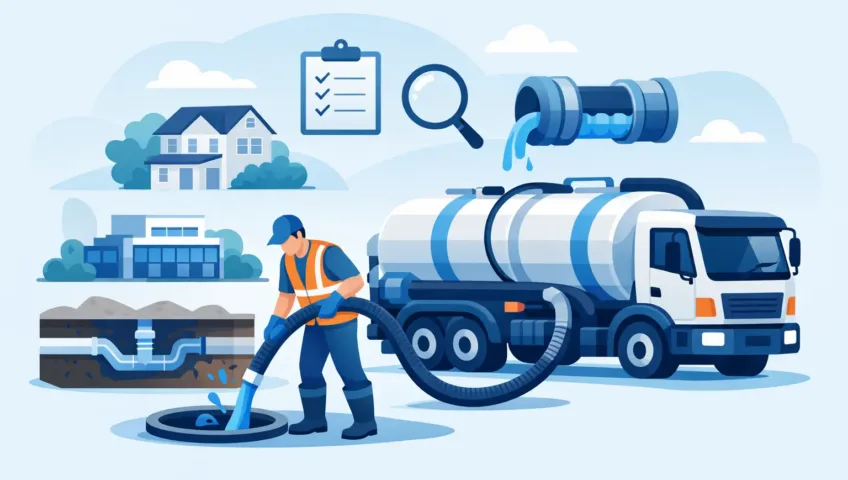
A full septic tank, overflowing gully or backed-up interceptor can turn from an unpleasant smell into a property-wide problem very quickly. If you are searching for drainage tanker services near me, you need more than a large vehicle turning up at some point – you need a trained team that can assess the situation, remove waste safely and leave clear advice on what happens next.
For homes, landlords and businesses, tanker work is often urgent. Wastewater must be contained, customers and staff need to stay safe, and normal use of the property needs to resume as soon as possible. Don’t panic, we’ve got you covered. The right drainage contractor will explain the work plainly before it begins, provide clear pricing and arrange an appropriate tanker without unnecessary delay.
When do you need a drainage tanker?
A drainage tanker is used to remove liquid waste, sludge and contaminated water from systems that cannot simply be cleared with drain rods or high-pressure jetting. Most people associate tankers with septic tank emptying, but they are also essential for cesspits, sewage treatment plants, grease traps, pumping stations, gullies and commercial interceptors.
At a domestic property, common warning signs include toilets draining slowly, unpleasant odours around an external tank, wet ground near the lid, gurgling pipes and wastewater backing up into the home. If sewage is surfacing, stop using water wherever possible. Avoid flushing toilets, running washing machines or emptying sinks until an engineer has advised you. Adding more water to an already full or failed system can make the overflow worse.
Commercial premises can face different pressures. Restaurants may need grease management alongside drainage cleaning, while industrial sites, offices and retail premises may have gullies or interceptors that require planned emptying. Waiting until an issue closes a kitchen, affects customer areas or creates a slip hazard is rarely the cheapest option. Scheduled servicing is usually easier to organise and far less disruptive than an emergency attendance.
Choosing drainage tanker services near me
Local availability matters because a tanker requirement can be time-sensitive, particularly where sewage, flooding or a blocked pumping system is involved. However, the nearest company is not automatically the best choice. Ask whether they cover your exact postcode, when they can attend and whether the vehicle being sent is suitable for the access and waste involved.
A good drainage contractor will ask practical questions before arriving. They may need to know the type of tank or chamber, its approximate size, where it is located, whether the cover is accessible, and whether there are gates, low branches, narrow lanes or weight restrictions. Tanker hoses can reach a reasonable distance, but a tanker cannot always park directly beside the tank. Sharing this information early helps prevent delays and avoids an unsuitable vehicle arriving on site.
Pricing should be clear too. Tanker costs can depend on the volume removed, access, waste type, the distance travelled and whether the visit is planned or an emergency. Be wary of vague estimates that do not explain what is included. Ask whether the quote covers attendance, pumping, waste disposal and any additional drainage investigation required. Fair pricing starts with an honest explanation, not a surprise after the job is done.
Safe disposal is part of the job
Removing waste is only one part of a proper tanker service. The material must be handled and disposed of in line with relevant requirements. This is especially significant for sewage, commercial waste and material from interceptors or grease systems, where the contents may need particular treatment.
You should also expect the team to work carefully around your property. A tidy engineer will protect accessible areas where practical, manage hoses safely and secure covers after emptying. If a tank cover is damaged, unsafe or buried under soil, that should be raised with you rather than ignored.
Emptying a tank will not fix every fault
This is the point many property owners only discover after an overflow. Emptying a septic tank or cesspit provides essential capacity, but it does not automatically cure the reason it filled too quickly or failed to drain correctly.
For a cesspit, regular emptying is normal because it is a sealed holding tank. For a septic tank or sewage treatment plant, frequent filling may suggest a separate fault. A blocked outlet, damaged pipework, failed soakaway, collapsed drain, excessive groundwater or a problem with a pump can all contribute. If the issue returns soon after emptying, further investigation is sensible.
A CCTV drain survey can show what is happening inside concealed pipework without unnecessary digging. Where repairs are needed, modern no-dig methods may be suitable in some cases, reducing disruption to driveways, gardens and business premises. It depends on the location and condition of the pipe, so a responsible engineer should not promise a repair method before diagnosing the fault.
What to do before the tanker arrives
Make the visit easier by keeping the route to the tank, chamber or gully as clear as you can. Move vehicles if they are blocking access, unlock gates and keep children and pets away from the work area. If you know where the inspection cover is, let the team know. If you do not, do not start digging blindly – covers can be damaged and buried services may be nearby.
For a sewage overflow, keep people away from contaminated water and do not attempt to wash it into a surface-water drain. Take sensible precautions such as ventilating affected rooms, avoiding direct contact and keeping contaminated footwear out of clean areas. A drainage engineer can advise on the immediate containment and clearance work required.
Businesses should tell the contractor about site rules, delivery restrictions and any areas that must remain open. An early-morning, evening or quieter-period visit may be possible for planned work, depending on the site and the service needed. For emergencies, the priority is making the area safe and getting your drainage system working again with minimum interruption.
Planned tanker work saves difficult call-outs
Not every tanker visit begins with a crisis. Planned emptying gives homeowners and site managers control over timing, access and budget. It is particularly useful for holiday lets, rural properties, managed blocks, food premises and sites with known seasonal demand.
The correct interval varies. A household septic tank may require periodic emptying based on tank size, household occupancy and how the system performs. A cesspit normally needs much more frequent attention. Commercial tanks, grease systems and interceptors should follow a schedule based on use, site conditions and any operational requirements. Guesswork can lead to overflows, but unnecessary emptying can add avoidable cost, so ask for advice tailored to your setup.
Keeping a simple record of emptying dates, reported faults and drainage surveys is worthwhile. It helps spot changing patterns and gives landlords, facilities teams and future engineers a clearer picture of the system. If a tank suddenly needs emptying far more often than before, that information can point towards a fault rather than normal demand.
Fast help across the Manchester area and beyond
For urgent drainage issues, response time matters. Absolute Drainage provides emergency and planned drainage support for homes and businesses across Manchester and locations within its wider service area. The family-run team can arrange help with septic and sewage tank emptying, gully work, blocked drains, surveys and repairs, with straightforward advice at every stage.
If you are dealing with an active overflow or a drainage system that has stopped working, explain exactly what you can see and smell when you call. Mention whether sewage is inside the property, outside near a tank, or affecting a customer or staff area. That allows the right response to be arranged from the outset.
A tanker visit should leave you with more than an empty tank. You should know what was removed, whether any warning signs were found, and whether further cleaning, surveying or repair is recommended. That clear information is what helps protect your property after the immediate problem has gone.