
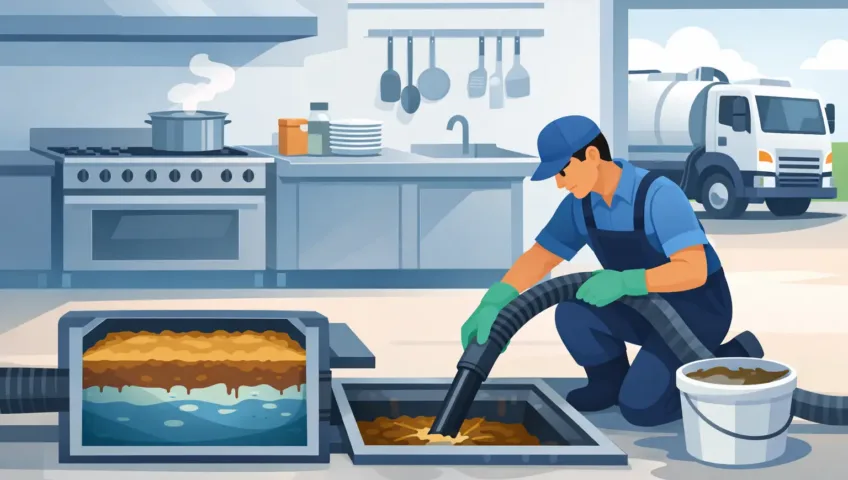
A kitchen can be busy, clean and well run on the surface while fats, oils and food waste are quietly building up below it. Regular grease trap cleaning is what stops that hidden build-up turning into foul odours, slow sinks, blocked drains and an interruption to service when you can least afford one.
For restaurants, cafés, pubs, takeaways and commercial kitchens, a grease trap is not a fit-and-forget piece of equipment. It needs planned attention. If it is overflowing, smelling bad or allowing grease into the drainage system, the problem has already moved beyond routine housekeeping.
What a grease trap does in a commercial kitchen
A grease trap, sometimes called a grease interceptor, sits on the wastewater line from kitchen sinks and appliances. As warm wastewater passes through, heavier food particles settle and fats, oils and grease rise and cool. The trap holds this material back while the cleaner water continues towards the drain.
That separation matters because grease does not stay liquid for long. Once it reaches cooler pipework, it sticks to the inside of drains. Over time, it catches food debris, wipes and other waste until water can no longer flow freely. What starts as a slightly slow sink can become a blocked kitchen drain, wastewater backing up through floor gullies, or a sudden closure during a busy shift.
A correctly sized and well-maintained grease trap protects your internal pipework and the wider drainage network. It also gives your team a far better chance of keeping the kitchen clean, safe and operational.
Why grease trap cleaning cannot be put off
Grease traps have a limited capacity. When the collected material is not removed, grease can pass through the unit, harden in the pipework and create restrictions further down the line. A trap that has been allowed to fill may also release unpleasant smells into food preparation and customer areas.
There is a commercial cost as well. A drainage emergency can mean disrupted food preparation, cancelled orders, staff pulled away from their jobs and unhappy customers. If wastewater spills onto a kitchen floor, there is also a hygiene and slip-risk issue to manage immediately.
Planned cleaning is usually simpler and less disruptive than an emergency callout. However, the right frequency depends on the size of the trap, the number of covers served, the type of food prepared and how much oil is used. A high-volume fried-food operation will need more attention than a small office canteen. The unit should be checked regularly rather than relying on a fixed calendar date alone.
Signs your grease trap needs attention
The first warning is often a smell. A sour, rancid or sewer-like odour around sinks, floor drains or the grease trap itself is a clear sign that waste has been sitting too long. Do not cover it with air freshener and hope it passes. The source needs dealing with.
Slow-draining sinks, gurgling sounds and water pooling around gullies are also common indicators. You may notice greasy residue around drain covers or find that the dishwasher or sink causes water to rise elsewhere in the kitchen. These are signs that grease is affecting the flow through the trap or the connected pipework.
If wastewater is backing up, the kitchen must stop using the affected fixtures until the issue is assessed. Continuing to run taps, dishwashers or appliances can turn a manageable blockage into a messy flood. Don’t panic, but act quickly and keep staff away from contaminated water.
What professional grease trap cleaning involves
Proper grease trap cleaning is more than lifting the lid and removing the visible layer from the top. The trap needs to be emptied fully, including settled food solids and wastewater, so that it can work as designed again.
A drainage engineer will first assess the unit, its access points and the condition of the surrounding drains. The contents are removed using suitable equipment and handled as controlled waste. The internal components can then be cleaned, with the unit checked for damage, poor connections or excessive grease passing through.
Where there are signs of a downstream restriction, the connected pipework may need clearing or jetting too. This is an important distinction. Emptying a grease trap helps prevent future blockages, but it may not clear a blockage that has already formed further along the drainage line.
The trap should be reassembled carefully and tested before the job is signed off. A professional visit should also give you a clear explanation of what was found, whether the unit is suitable for the kitchen’s current workload and when it should next be serviced.
How often should a grease trap be cleaned?
There is no single interval that suits every premises. Some busy kitchens need servicing every few weeks, while a lower-use site may be able to schedule it less often. The key is to clean the trap before grease and solids reach a level where they can escape into the drainage system.
Your cleaning routine should reflect real kitchen use, not just the assumptions made when the trap was installed. A menu change, extended opening hours, a new fryer or a period of higher trade can all increase the amount of grease entering the system.
Keep a simple service record showing cleaning dates, any drainage issues and observations from engineers. This makes it easier for managers, landlords and facilities teams to spot a developing pattern. It is also useful evidence that the equipment has been maintained responsibly.
Kitchen habits that reduce drainage problems
A grease trap is a protective barrier, not permission to pour anything down the sink. Good kitchen habits make a real difference between professional visits.
Scrape plates, pans and cookware into a food-waste container before washing them. Allow cooking oil to cool and collect it for proper disposal rather than tipping it into a drain. Train staff not to flush wipes, cloths, coffee grounds, rice, flour or food scraps into sinks or floor gullies.
Be cautious with chemical drain cleaners as well. Strong products may appear to shift grease temporarily, but they can be hazardous for staff, damage pipework or simply push the problem further into the system. They do not remove the accumulated waste from a grease trap.
When an emergency drainage response is needed
A full grease trap does not always mean an emergency, but wastewater backing up into a kitchen does. So does a sudden loss of drainage at multiple sinks, a serious odour affecting customers, or water escaping from gullies and drain covers.
In these situations, stop using the affected outlets, contain the area where safe to do so and arrange professional help. An engineer can identify whether the fault is confined to the grease trap or whether grease has caused a blockage in the internal or external drains. CCTV drainage surveys can also be useful where repeat blockages suggest a deeper defect, collapsed pipe or unsuitable drainage layout.
For businesses across England that need urgent or planned help, Absolute Drainage provides commercial drainage support with trained engineers, modern equipment and a practical explanation before work begins. Whether the job is a routine clean or a kitchen drainage emergency, the aim is the same: get the system working properly with as little disruption to trading as possible.
A maintenance plan is cheaper than a closure
The best time to arrange grease trap cleaning is before the kitchen smells, the sinks slow down and a manager is forced to deal with an avoidable problem during service. Planned maintenance gives you control over timing, helps protect your drains and reduces the likelihood of costly downtime.
If your grease trap is overdue, arrange a professional inspection and cleaning rather than waiting for the first backup. A clean, correctly operating trap is one of those behind-the-scenes jobs customers will never notice – and that is exactly how it should be.