
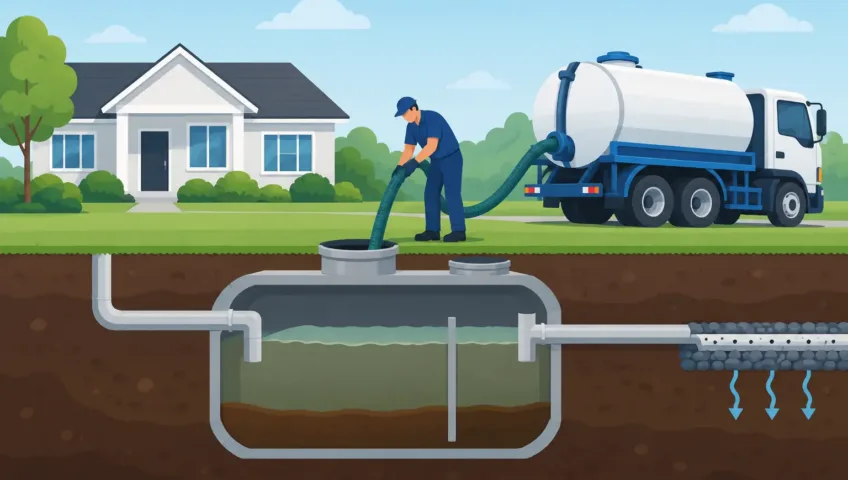
A septic tank rarely gives much warning before it becomes a messy, expensive problem. One day everything appears normal; the next, toilets are slow to flush, drains smell unpleasant, or wastewater is backing up outside. Knowing how often to empty a septic tank is one of the simplest ways to avoid that disruption.
For most homes, a septic tank should be professionally emptied every 12 months. Some smaller households may be able to go longer, while busy family homes, rental properties and commercial sites may need a visit every six months. The right schedule depends on how the tank is used, not just its size.
How often should you empty a septic tank?
As a sensible starting point, arrange septic tank emptying once a year. This removes the settled sludge at the bottom of the tank and the floating layer of fats, oils and solids at the top. These layers build up gradually, leaving less space for wastewater to settle properly before it flows onwards to the drainage field or soakaway.
A tank that is left too long can send solids into the outlet pipework and drainage field. That can cause blockages, unpleasant odours and surface water pooling, but the bigger concern is damage to the soakaway. Repairing or replacing a failed drainage field is far more disruptive and costly than keeping on top of regular emptying.
If you have just moved into a property and do not know when the tank was last serviced, do not guess. Booking an emptying visit and checking the tank’s condition gives you a clear baseline for future maintenance.
A practical guide by property type
A one or two-person household with a correctly sized tank may only require emptying every 18 to 24 months. That said, annual emptying is often the safer choice where the age, capacity or condition of the system is unclear.
A typical family home usually needs annual emptying. Families use more water, run more washing loads and put more demand on toilets, showers and sinks. A property with frequent visitors, several bathrooms or teenagers at home may need closer monitoring.
Holiday lets, caravan sites, pubs, offices and other commercial premises need an individual schedule. Usage can change sharply during school holidays, events or busy trading periods. For these properties, a planned maintenance agreement is often more reliable than waiting until there is a problem.
What changes the septic tank emptying schedule?
Tank size matters, but it is not the only factor. A large tank serving a large family can fill faster than a smaller tank serving one person. The condition of the tank, its outlet and the drainage field also affect how well the system copes.
Water use is a major consideration. Long showers, frequent baths, large washing loads and leaking toilets can all increase the volume entering the tank. Excess water does not necessarily mean more sludge, but it can reduce settling time and put pressure on the system.
What goes down the drain matters just as much. Flushable wipes do not break down as advertised in a septic system, and neither do sanitary products, cotton buds, nappies or paper towels. Cooking fat, oils, bleach used excessively and harsh chemicals can create their own issues too. Fats can form a thick crust, while strong chemicals may interfere with the natural bacteria that help break down waste.
A septic tank is not a general rubbish bin. Keeping unsuitable materials out is one of the best ways to protect the tank between emptying visits.
Do not rely on additives to delay emptying
Many septic tank additives claim to reduce sludge or remove the need for professional emptying. Be cautious. A functioning tank already contains bacteria that break down organic waste, but no bottle can make sludge disappear indefinitely.
Some products can upset the balance inside the tank or simply mask an underlying issue. Regular, professional desludging remains the dependable approach. It protects the tank, the drainage field and the surrounding ground.
Signs your septic tank may need emptying sooner
Do not wait for wastewater to appear in the garden. By that point, the problem may have already reached the drainage field or pipework. If you notice a change in how your plumbing behaves, it is worth acting early.
Common warning signs include:
- Toilets that flush slowly or rise higher than usual before draining
- Gurgling from sinks, baths or internal pipework
- Persistent drains smells indoors or around the tank and soakaway
- Wet, boggy or unusually green ground near the drainage field
- Water or sewage backing up through external drains or inspection chambers
These signs do not always mean the tank is simply full. A blockage, collapsed pipe, damaged outlet or failed soakaway can cause similar symptoms. A trained drainage engineer can explain what is happening and recommend the appropriate work rather than treating every issue as a routine emptying job.
What happens during professional septic tank emptying?
Professional emptying is straightforward when access is available. The engineer locates and opens the tank cover, assesses the contents, then uses a vacuum tanker and hose to remove sludge and liquid safely. The waste is transported for authorised disposal, and the tank can be visually checked for obvious concerns such as damaged covers, cracked chambers or blocked outlets.
Access can affect the job. If the tank is behind a locked gate, under overgrown vegetation or some distance from where the tanker can park, let the drainage team know when booking. Clearing access where it is safe to do so can help the visit run smoothly.
You should not attempt to enter, inspect deeply or empty a septic tank yourself. Septic tanks can contain harmful gases and are confined spaces. This work requires the correct equipment, trained operatives and legal waste handling procedures.
Emptying is maintenance, not a cure for every fault
If a tank fills unusually quickly soon after it has been emptied, something else may be wrong. It could be a leaking toilet, groundwater entering through a damaged tank, a blocked outlet, or a drainage field that is no longer dispersing wastewater properly.
Likewise, an empty tank will not repair cracked pipework or restore a saturated soakaway. In these cases, further investigation may be needed, often with a drain survey or checks of the tank and drainage field. Getting the cause right first can prevent paying for repeat callouts that do not solve the issue.
There are also rules around septic tank discharges in England. For example, septic tanks must not discharge directly to a watercourse. If you are buying a property, changing a system or concerned about an older installation, seek professional advice on whether the setup meets the relevant requirements.
Plan ahead instead of waiting for an emergency
Put the next emptying date in your calendar as soon as the current visit is complete. Keep any paperwork with your property records, particularly if you are a landlord, manage several sites or may sell the property in future. A simple record helps establish a sensible maintenance pattern and shows that the system has been looked after.
For homeowners, regular emptying is a small planned job that can prevent a very unpleasant emergency. For businesses and property managers, it helps avoid toilet closures, odours, disruption to staff and customers, and avoidable damage to the site.
If you are unsure whether your tank is due, seeing warning signs, or dealing with a sewage backup, do not panic. Absolute Drainage can assess the situation, explain the work clearly and arrange septic tank emptying or further drainage investigation where needed. Acting before the system overflows is the kindest option for your property, your neighbours and your wallet.