
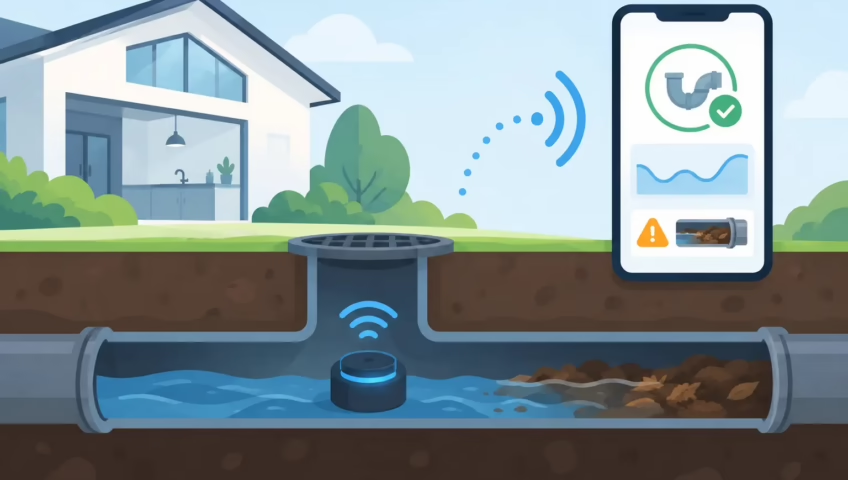
A drain rarely fails without giving some warning first. Water may take longer to clear, a gully may fill after moderate rain, or a recurring smell may appear near a manhole cover. Smart drain monitoring helps turn those early signs into useful information, so a small issue can be dealt with before it becomes a flooded kitchen, closed toilet or disrupted trading day.
For homeowners, landlords and businesses, that matters. An emergency blockage is stressful enough when it happens during normal hours. When sewage backs up, rainwater floods a yard or a restaurant toilet goes out of use on a busy weekend, the cost is not just the repair. It is the clean-up, lost time and damage to the property or reputation.
What is smart drain monitoring?
Smart drain monitoring uses sensors and connected devices to track what is happening inside a drainage system over time. Depending on the setup, equipment can measure water level, flow, temperature or the condition of a pump. It then sends readings to a dashboard or alerts a nominated person when conditions move outside an agreed range.
A simple example is a level sensor fitted in a pumping chamber, interceptor or high-risk gully. If the level stays unusually high, rises too quickly or fails to fall after a pump cycle, the system can raise an alert. That gives the property owner or facilities team a chance to arrange an inspection before the chamber overflows.
It is not the same as a CCTV drain survey. A CCTV survey shows the physical condition of drains at a particular point in time, using a camera to identify cracks, root ingress, displaced joints, scale build-up and obstructions. Monitoring watches for changes in how the system performs between inspections. Used together, they offer a far clearer picture.
Where smart drain monitoring makes the biggest difference
Continuous monitoring is not necessary for every house drain. For a typical home with no history of blockages, sensible drain use, occasional cleaning where needed and prompt action on slow drainage may be the more practical choice. Technology should solve a genuine problem, not add cost for the sake of it.
It is particularly valuable where a failure would cause serious disruption or where the drains are hard to check regularly. Commercial kitchens, schools, retail sites, offices, industrial premises, flats with shared drainage and managed estates are common examples. So are properties with sewage pumps, lifting stations, basement facilities, septic tanks or rainwater systems that can be overwhelmed during heavy weather.
A restaurant may want advance warning that a grease management system or drain line is struggling, rather than discovering it when customers report a blocked toilet. A landlord responsible for several properties may need visibility of a shared pumping system. On a commercial site, an early alert can help a manager arrange work outside peak hours and keep staff and customers safe.
The warning signs monitoring can reveal
The value is usually in the pattern, rather than one isolated reading. If a drain level is gradually rising after each period of use, that can point to a developing restriction. If a pump is running more often than normal, it may be working against a blockage, a damaged pipe or an incoming flow it was not designed to handle.
Repeated high-level alerts after rain can suggest that surface water is not draining away properly. A sudden change can also flag a fault that needs urgent attention. The monitoring system cannot always diagnose the precise cause, but it can show that a visit should be arranged before the problem becomes visible above ground.
Monitoring does not repair a drain
This is the key trade-off. Smart technology provides early warning, but it does not remove fat, wipes, silt, roots or broken pipework. It cannot clear a blocked gully, repair a collapsed drain or replace a failed pump. It also depends on correctly positioned sensors, a reliable power and communications setup, and someone who will act when an alert arrives.
That is why a monitoring plan should include a clear response process. Who receives alerts? What level triggers an immediate call-out? Is there an approved drainage contractor who knows the site and can attend when needed? Without those decisions, notifications can be ignored until the issue is no longer minor.
For sites with older drainage, start with a professional assessment. A CCTV drain survey can establish whether there are existing defects that monitoring will not cure. If roots have entered the line or a pipe has dropped, the right answer may be drain repair or no-dig lining, followed by monitoring to protect the repaired system where appropriate.
How to set up smart drain monitoring sensibly
Begin with the consequence of failure. A blocked sink in a small office and an overflowing sewage pumping chamber do not need the same level of oversight. Consider what would happen if the system stopped working for two hours, overnight, during a bank holiday or in heavy rain. That helps decide whether permanent monitoring is justified.
Next, identify the parts of the system most likely to cause trouble. This may be a pump chamber, grease trap, septic tank, gully run, interceptor or a drain serving multiple tenants. Existing maintenance records are useful here. If the same line blocks every few months, that is a strong reason to investigate the underlying cause rather than simply paying for repeated emergency unblocking.
The alert thresholds should be realistic. Set them too tightly and the team receives nuisance alarms, which can lead to alerts being dismissed. Set them too loosely and there may not be enough time to prevent an overflow. A drainage engineer can help match the settings to the capacity and normal use of the system.
Finally, pair monitoring with planned maintenance. This could include scheduled drain cleaning, gully emptying, grease removal, pump checks or septic tank emptying, depending on the property. Monitoring can help make maintenance more targeted, but it does not remove the need for it.
What to do when an alert arrives
Do not panic, but do not leave it for days either. Check whether there is an obvious cause that can be addressed safely, such as heavy rainfall affecting a surface-water area. Avoid lifting covers or entering chambers yourself, particularly around sewage systems, as confined spaces and harmful gases present serious risks.
If water is backing up, toilets are slow to flush, a pump alarm sounds repeatedly or there is any risk of flooding, contact a drainage professional promptly. Give them the alert details, the location of the affected equipment and any recent changes on site. Useful information helps engineers arrive prepared and reduces delays.
Absolute Drainage can assess urgent drainage issues, clear blockages, carry out CCTV inspections and advise on a practical maintenance plan. For commercial and managed properties, a planned approach can protect tenants, customers and day-to-day operations without waiting for a crisis.
The best time to deal with a drainage problem is when it is still a warning on a screen, not wastewater on the floor. A sensible monitoring setup, backed by regular maintenance and a dependable response plan, gives you more control when it matters most.