
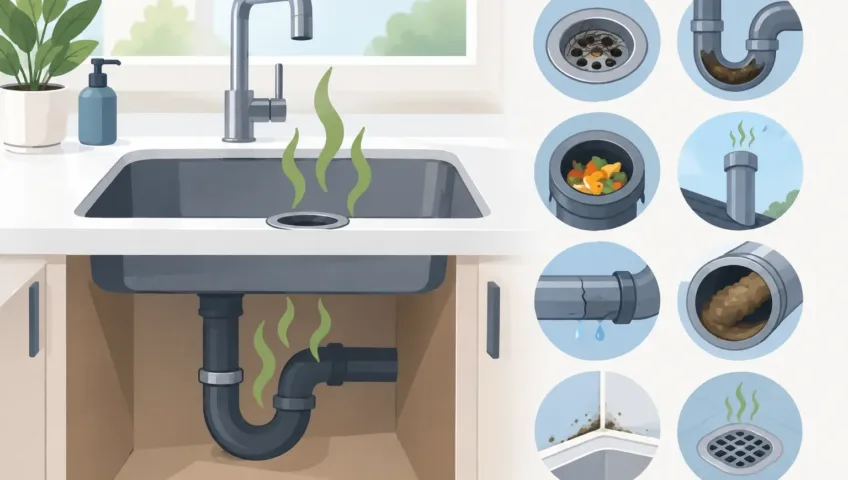
A drain smell can turn up without warning: you walk into the kitchen, bathroom or utility room and catch a whiff of stale sewage, rotten eggs or damp waste. If you are asking what causes drain smells indoors, the answer is often a small fault that can be put right quickly. But a persistent odour can also point to a blocked, damaged or poorly ventilated drain that needs professional attention.
Don’t panic, but don’t simply mask the smell with air freshener either. Drain odours are unpleasant for a reason. They can indicate that gases from the drainage system are finding a route back into the property, rather than safely leaving through the external pipework and soil vent.
What causes drain smells indoors most often?
The most common cause is a dried-out trap. Every sink, basin, shower, bath and floor drain should have a U-shaped section of pipe, usually called a trap, containing water. That water acts as a seal between your home and the drainage system. When it evaporates, sewer gases can rise through the plughole.
This is especially common in guest bathrooms, empty properties, rarely used en-suites, utility sinks and floor drains in garages or commercial premises. Run water into the affected fitting for a minute or two, then see whether the smell improves over the following few hours. If it does, the trap was probably dry. Adding a small amount of mineral oil can slow evaporation in a drain that is rarely used, although regular flushing is usually the better long-term habit.
A smell coming from one fitting is generally easier to trace than an odour affecting several rooms. When more than one drain smells, the issue may sit further along the pipework or outside the building.
Build-up inside the waste pipe
Kitchen and bathroom waste pipes collect more than water. Soap residue, hair, toothpaste, food scraps, grease and washing-up liquid can stick to the inside of the pipe. Over time, bacteria feed on this build-up and create the familiar sour, musty or rotten smell.
You may notice that the sink still drains, just more slowly than it used to. That does not mean the pipe is clear. A partial blockage can allow enough water through while holding a layer of foul-smelling waste behind it.
Remove visible debris from the plughole and clean the plug, overflow opening and waste fitting. Flush with hot water where suitable for the pipework, but take care with boiling water around older plastic pipes. Avoid repeatedly pouring harsh chemical cleaners down the drain. They may not reach the real obstruction, can create fumes, and can make work more hazardous for anyone later clearing the drain.
A blocked or dirty external drain
If the odour is stronger near a ground-floor bathroom, kitchen, utility room or external doorway, an outside drain may be blocked or heavily silted. Leaves, fat, wipes, sanitary products and general debris can obstruct the line and leave wastewater sitting in the system.
Outside drains and gullies are designed to carry rainwater or wastewater away. Once they are blocked, smells can travel back through connected pipework. You might also see slow-draining sinks, gurgling noises, water sitting in a gully, or waste water rising when appliances are used.
Never put your hands into a drain chamber or try to force a blockage deeper using unsuitable rods. Blocked drains can contain contaminated water, and a badly handled blockage may damage pipework or cause an indoor backup. A drainage engineer can clear the line properly and check whether the blockage has exposed a larger problem.
Drain smells inside the house can be caused by poor venting
Your drainage system needs air as well as flowing water. Soil vent pipes release gases safely above roof level and help pressure stay balanced as water moves through the pipes. If a vent is blocked, damaged or incorrectly installed, water seals in traps can be pulled out or disturbed.
The usual clue is gurgling. A basin may bubble after a toilet is flushed, or a shower trap may smell shortly after the washing machine empties. This can happen because the system is struggling to draw in air, creating negative pressure that siphons water from a trap.
Birds’ nests, leaves and other debris can affect external vent pipes, but roof-level work is not a DIY job. Internal air admittance valves can also fail or be fitted in the wrong place. An engineer can assess the layout, test the drainage run and recommend the right repair rather than treating the smell alone.
Failed seals around toilets or pipes
A toilet that smells of drains, particularly at its base, may have a failed pan connector or seal. The toilet does not always leak water when this happens. Gases can escape through a small gap even when the connection appears dry.
Look out for a toilet that rocks slightly, a persistent smell after cleaning, staining around the base, or damp flooring nearby. Do not ignore these signs, particularly on a timber floor or in a rented property, as ongoing damp can damage the surrounding structure.
Loose or cracked pipe joints can create a similar problem under sinks, behind boxing or inside cupboards. If the smell is worse in a cabinet, check carefully for dampness, staining and drips. A visible leak needs prompt attention, but a hidden pipe fault may require a CCTV drain survey to find it without unnecessary excavation.
Other causes that are easy to miss
Sometimes the drain is not the main culprit. A dishwasher or washing machine can smell if its filter, hose or standpipe contains trapped residue. Clean the appliance filter in line with the manufacturer’s guidance and check that the waste hose has not slipped out of position or been pushed too far down the standpipe.
In kitchens, food waste in a sink overflow can smell surprisingly strong. In bathrooms, the build-up may be concentrated beneath a pop-up waste or around the shower trap. Commercial kitchens have their own risks: grease entering the drainage system can cause repeated odours and blockages unless grease management and routine cleaning are in place.
Properties with septic tanks or sewage treatment systems should take indoor odours seriously too. A full tank, failed pump, blocked outlet or overdue emptying can affect the way waste leaves the property. If drains are slow and smells are spreading, arrange an inspection rather than waiting for a backup.
When should you call a drainage engineer?
A one-off smell from a rarely used sink may disappear after running the tap. However, professional help is sensible when the odour returns, becomes stronger, affects multiple rooms or comes with slow drainage, gurgling, leaks or rising water outside.
Call urgently if sewage is backing up into a shower, sink or toilet, if contaminated water is pooling indoors, or if a commercial site has an odour that could affect staff, customers or food hygiene. Keep children and pets away from contaminated water, ventilate the room where possible, and avoid using toilets, washing machines or sinks connected to the suspected blockage until it has been assessed.
A proper visit should focus on the cause, not just the smell. Depending on the symptoms, this may involve clearing the drain, inspecting gullies, testing pipe connections or using a CCTV survey to check for cracks, root ingress, collapsed sections and stubborn internal build-up. No two properties are exactly the same, so the right fix depends on where the smell is entering and what the drainage system is doing at the time.
Absolute Drainage provides 24/7 support for blocked drains, foul odours, drainage repairs and CCTV investigations, with clear explanations before work begins. Whether it is one troublesome sink or a problem affecting an entire building, getting the source checked early is usually cleaner, quicker and less disruptive than waiting for the smell to become a blockage.
A fresh-smelling home should not require scented sprays to hide a drainage fault. If basic cleaning and refilling the trap do not solve it, trust what the smell is telling you and have the drainage system checked before a small issue turns into an unpleasant indoor emergency.