
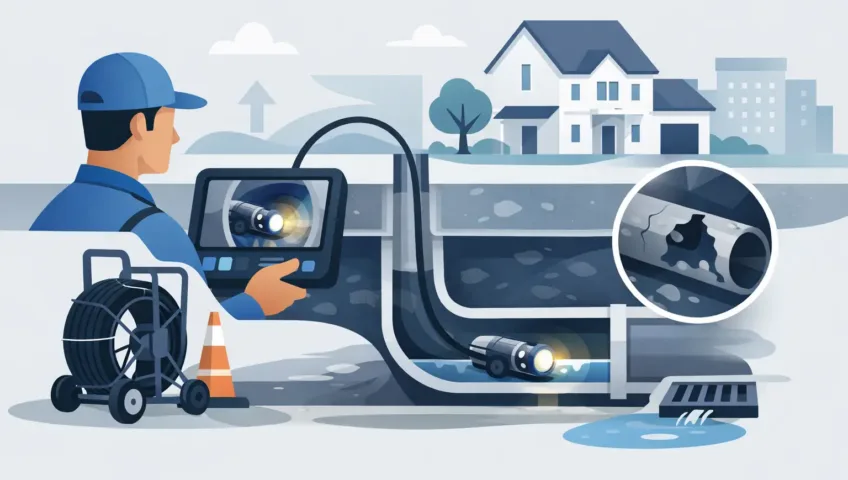
A drain can look clear from the surface while a serious problem is developing underground. A CCTV drain survey removes the guesswork by sending a specialist camera through your pipework, showing exactly what is causing repeat blockages, bad smells, slow drainage or leaks. Rather than paying for trial-and-error work, you get clear evidence of the condition of the drain and a sensible plan for putting it right.
For homeowners, landlords and businesses, that certainty can save a great deal of disruption. Whether you have water backing up in a kitchen sink, a gully that keeps overflowing or a drainage issue affecting customers and staff, the first priority is to understand what is happening below ground.
What is a CCTV drain survey?
A CCTV drain survey is a visual inspection of your underground drainage system. A trained engineer feeds a waterproof, high-definition camera into the drain, then monitors the live footage as it travels through the pipework. The camera can identify a blockage, crack, displaced joint, tree root ingress, collapse or a poorly connected pipe without digging up your driveway, garden, shop floor or car park.
The survey is not simply a camera pushed down a pipe. The engineer uses the footage to assess the location, nature and likely cause of the fault. Where required, the findings can be recorded and set out in a report, giving you useful evidence for a repair decision, a property purchase or a conversation with insurers.
This approach is particularly useful when a drain has been cleared but keeps blocking again. Clearing removes the immediate obstruction. A survey explains why it was there in the first place.
Signs you should arrange a CCTV drain survey
One blocked toilet after too much paper has gone down it may only need straightforward drain unblocking. But recurring or unexplained problems deserve a closer look. Waiting can turn a manageable repair into flooding, foul odours, damaged surfaces or disruption to your household or business.
You should consider a survey if drains repeatedly back up, several fixtures drain slowly at once, foul smells persist after cleaning, or wastewater appears around an outside gully. Damp patches, sunken paving and unusually lush areas of grass can also point to a leaking or damaged underground pipe.
Tree roots are a frequent issue, especially around older properties. Roots naturally seek moisture and can force their way through tiny gaps at joints. Once inside, they catch wipes, grease and debris until the pipe begins to block. A drain may clear temporarily, only to fail again because the root growth remains.
For commercial premises, warning signs can include overflowing grease traps, recurring toilet blockages, standing water in service yards and complaints from customers or tenants. Restaurants, pubs and food businesses are especially vulnerable to fat, oil and grease build-up. A camera inspection helps establish whether the problem is localised or part of a wider drainage fault that needs planned maintenance.
When a survey is worth the cost
A CCTV survey is often the right next step after a repeat blockage, but it is also valuable before problems become urgent. Landlords may use one to investigate tenant reports and document the condition of drainage pipework. Property managers can use surveys to plan repairs across a site without closing off more areas than necessary.
It is also sensible to arrange a survey when buying a property, particularly an older home or one with large trees nearby. Standard house surveys do not always inspect the full drainage network. Finding out about a cracked drain after completion can be an expensive surprise, especially if access runs beneath a driveway, extension or neighbouring land.
New-build and renovation projects can benefit too. A post-build inspection can identify construction debris, poorly aligned pipework or defects before they become someone else’s problem. If you are planning an extension, a survey may reveal where existing drains run and whether their condition needs attention before building work starts.
The value depends on the circumstances. If a one-off blockage has a clear cause and clears fully, a camera inspection may not be needed. If the same drain blocks every few months, or there are signs of structural damage, it is usually more cost-effective to investigate properly than to keep paying for emergency call-outs.
What happens during a CCTV drain survey?
The engineer will first ask about the symptoms, when they began and which drains are affected. This matters because it helps narrow down whether the issue is likely to be within a single waste pipe, an external drain run or the wider system.
If the drain is heavily blocked, it may need to be cleared first using professional rodding or high-pressure water jetting. A camera cannot provide a useful view through standing sewage, thick grease or compacted debris. Once the line is open enough to inspect, the survey can begin.
The camera is inserted through a suitable access point, such as an inspection chamber, manhole or gully. Live footage lets the engineer track the pipe condition and identify defects. Modern systems can help pinpoint the position of a problem above ground, reducing the risk of unnecessary excavation.
At the end, you should receive a plain-English explanation of what was found. If repairs are needed, a good drainage contractor will explain the options before work begins, including the likely disruption, cost and urgency. You should not be left with technical footage and no idea what it means.
What can the camera reveal?
A survey can show much more than a simple blockage. Common findings include scale and silt deposits, fat and grease build-up, flushable wipes, foreign objects, cracked pipes, open joints, displaced sections, root ingress and collapsed drains. It can also reveal dips in the pipe, sometimes called bellies, where water and waste collect instead of flowing away properly.
Not every defect means the whole drain needs replacing. A small crack or faulty joint may be suitable for a no-dig repair, such as drain lining or patch lining. This creates a new, sealed section inside the existing pipe and can avoid digging through patios, flooring or landscaped areas.
There are trade-offs. Trenchless repairs are often quicker and less disruptive, but they are not suitable for every drain. A fully collapsed pipe, severe misalignment or a section with insufficient access may require excavation. The advantage of the survey is that the choice is based on evidence, not assumptions.
Why clear reporting matters
A camera survey is most useful when it leads to an informed decision. Ask whether you will receive images, footage or a written report, especially if the survey is for a house purchase, insurance query, landlord record or commercial maintenance file. The report should identify the affected section, describe the fault and recommend proportionate next steps.
Be cautious of anyone who jumps straight from a vague camera finding to a major excavation without explaining the evidence. Equally, do not ignore a report that identifies a serious defect simply because the drains are flowing for now. Cracks and root intrusion rarely improve on their own.
At Absolute Drainage, trained engineers use modern survey equipment to locate drainage faults accurately and explain the findings clearly. The aim is simple: get the drain working properly with the least practical disruption, whether that means clearing it, repairing one section or planning larger work around your property or trading hours.
Preparing for the visit
There is usually very little you need to do. Keep access to manholes, inspection chambers and gullies clear where possible, and let the engineer know if covers are beneath decking, stored items or parked vehicles. If the problem affects a business, explain any site rules, delivery times or customer-facing areas that need to remain accessible.
Try not to use large volumes of water immediately before the appointment if the drain is already backing up. It is also helpful to note when the issue happens. Does the toilet back up when the washing machine drains? Does the gully overflow only during heavy rain? Those details can speed up diagnosis.
Do not panic if the survey identifies a fault. The useful thing is knowing where you stand. A clear picture of your drains gives you the chance to deal with the right problem at the right time, before a small underground defect becomes an unpleasant emergency above ground.