
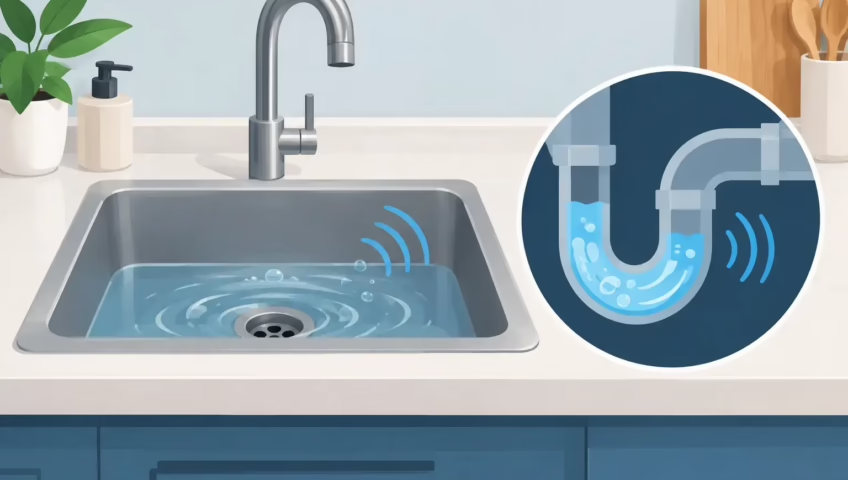
A sink that gurgles after you pull the plug is not just being noisy. That bubbling or glugging sound usually means air is struggling to move through the pipework as water drains away. So, why does my sink gurgle? In many cases, it is an early warning that a partial blockage or venting problem is developing – and dealing with it now can help prevent a complete blockage, bad smells or water backing up into the basin.
The good news is that a gurgling sink does not automatically mean a major repair is needed. Grease, soap residue, food waste and hair are common causes, particularly in kitchen and bathroom sinks. But if the noise is persistent, affects more than one fixture, or comes with slow drainage, it is worth getting it checked before the problem becomes more disruptive.
Why does my sink gurgle when it drains?
Your drainage system needs both water and air to work properly. As water travels down the waste pipe, air must move behind it to balance the pressure. If the pipe is narrowed by debris, or the system cannot draw in enough air, the water can create suction. The gurgle is air being pulled through the water trap or forced back up through the plughole.
Think of it as a warning that the pipe is not flowing as freely as it should. The location and timing of the sound matter. A kitchen sink that gurgles after washing up points towards a local build-up of fat and food debris. A bathroom basin that gurgles when the toilet is flushed may indicate a problem further along the shared waste pipe or drainage system.
The most common causes of a gurgling sink
A partial blockage in the waste pipe
This is the most likely cause. In kitchens, cooking fat, oil, coffee grounds and small food particles can stick to the inside of pipes. Over time, the opening becomes smaller and water has to squeeze past the build-up. In bathrooms, hair, toothpaste, soap scum and toiletries are frequent culprits.
The sink may still empty, just more slowly than usual. That is why it is easy to put off. However, partial blockages often collect more debris quickly, eventually leading to standing water in the sink or an overflow at the worst possible time.
A blocked or dirty trap
The curved section beneath the sink is called the trap. It holds water to stop foul drain odours entering your property. It also catches debris, which is useful until too much gathers there.
If you are comfortable doing so, place a bowl and towel beneath the trap, unscrew it carefully and remove any visible waste. Refit it securely, then run the tap and check for leaks. This is often a sensible first check for a single slow, gurgling basin. If the trap is clear but the noise remains, the restriction is likely further down the pipe.
Poor ventilation in the drainage system
Drainage pipework needs ventilation to equalise pressure. A soil vent pipe, air admittance valve or another part of the system may be blocked, faulty or incorrectly installed. Without adequate air, water can pull the seal from a trap and create that familiar glugging sound.
Vent problems are not always visible from inside the property, and they should not be guessed at. A damaged or poorly working vent can allow unpleasant smells into bathrooms and kitchens, as well as causing repeated noise and slow drainage.
A blockage further along the drain
When several fittings are affected, the issue may not be under the sink at all. For example, if your kitchen sink gurgles, the washing machine drain is slow and an outside gully is holding water, there may be a blockage in the branch drain or main run.
Outside drains can become obstructed by grease, wipes, silt, leaves, roots or structural damage. Older properties can be particularly prone to cracked or displaced pipework. A professional drainage engineer can identify the exact cause with the right equipment rather than clearing one section and hoping the problem stays away.
A more serious defect in the drain
Less commonly, recurring gurgling can be linked to a collapsed pipe, root ingress or a badly graded drain where water and waste do not flow away correctly. These faults are unlikely to be solved with drain cleaner or a quick plunge.
This is where a CCTV drain survey is useful. A camera inspection shows what is happening inside the pipe and helps avoid unnecessary digging. Depending on the fault, a no-dig repair may be possible, keeping disruption to your home, garden or business premises to a minimum.
Safe checks you can try first
If the sink is draining slowly but there is no overflow, start simply. Remove the plug and clear away visible debris. Flush the basin with hot water – not boiling water if you have plastic pipework, as extreme heat can damage some fittings. You can then use a plunger, ensuring there is enough water in the basin to form a seal.
If your sink has an overflow opening, cover it with a damp cloth while plunging. Otherwise, pressure escapes through the overflow rather than working on the blockage. A few firm plunges may shift a soft build-up close to the plughole or trap.
Avoid reaching for harsh chemical drain cleaners as a first response. They can be unpleasant and dangerous to handle, may damage older pipework or seals, and often fail to remove a substantial blockage. Never mix cleaning products, and do not use chemicals before calling an engineer without telling them. Residue in the pipe can create a safety risk during drain-clearing work.
Do not force rods or improvised tools into the pipe. It is possible to crack a fitting, push the blockage further down the system or leave part of a tool stuck in the drain. A small problem can then become a repair job.
When a gurgling sink needs professional help
Call a drainage engineer promptly if water is backing up, the sink will not drain, or a bad smell is coming from the plughole. You should also arrange an inspection if the noise keeps returning after cleaning the trap, if more than one sink or appliance is affected, or if the toilet makes noises when other water is used.
For landlords, property managers and commercial premises, repeated gurgling should not be ignored. In a restaurant, staff kitchen or customer toilet, a developing drainage blockage can quickly affect hygiene, trading and customer confidence. Planned drain cleaning is often far less disruptive than an emergency closure caused by an overflow.
An experienced engineer should explain what they find before work begins and set out the appropriate solution, whether that is clearing the waste pipe, jetting a blocked drain, repairing damaged pipework or carrying out a camera survey. At Absolute Drainage, our trained team handles urgent and planned drainage work around the clock, with clear advice and no call-out fee.
How to reduce the chance of it happening again
Good habits make a real difference. Keep cooking fats and oils out of the sink, even if they look liquid when warm. Let them cool in a container and dispose of them in the bin. Use a plughole strainer to catch food scraps and hair, and empty it regularly.
Bathroom sinks benefit from regular cleaning before soap residue and hair harden inside the trap. In busy households, rental properties and commercial kitchens, preventative drain cleaning can be worthwhile because the amount of daily use makes build-up more likely.
A gurgling sink is your drainage system asking for attention, not something you have to live with. If a simple clean does not restore a quiet, free-flowing sink, getting the cause properly diagnosed early is the best way to avoid an inconvenient blockage later.