
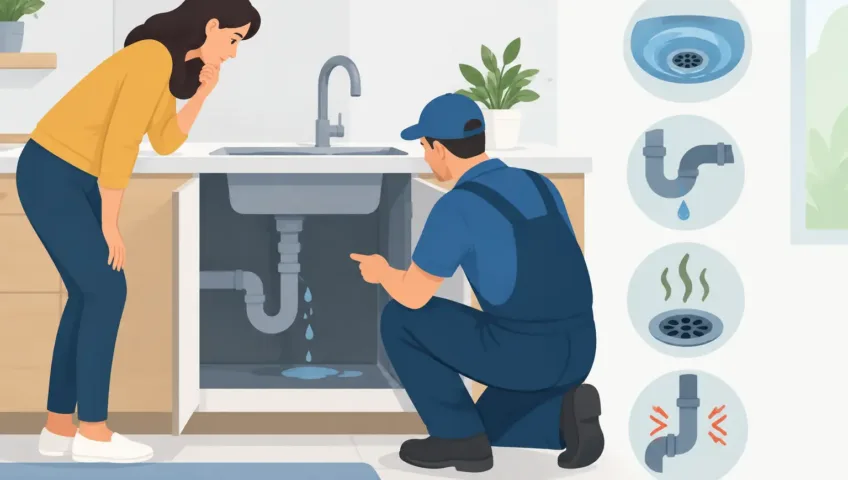
A blocked toilet is stressful. A blocked toilet that keeps returning, smells unpleasant or causes water to appear outside is a warning that the problem may be deeper underground. Professional drain repairs deal with the damaged pipework behind repeat blockages, leaks and flooding – before a manageable fault becomes a much larger disruption.
For homeowners, landlords and businesses, the priority is usually simple: get the problem identified properly, understand the cost, and get the property back to normal with as little mess as possible. Don’t panic, we’ve got you covered. The right repair starts with an accurate diagnosis, not guesswork or a temporary fix.
When do drain repairs become necessary?
A one-off blockage can often be cleared with professional drain jetting. However, if the same drain blocks again soon afterwards, clearing it alone may not solve the underlying cause. Cracked pipes, displaced joints, root ingress and collapsed sections of drain can all catch waste and allow water to escape into the surrounding ground.
Some warning signs are obvious. Others are easy to put off until the issue becomes urgent. It is worth arranging an inspection if you notice repeated slow drainage, gurgling from toilets or plugholes, foul odours indoors or around external drains, or sewage backing up into a sink, shower or gully.
Outside, look out for damp patches that do not dry, unusually lush areas of grass, sunken paving, cracks in a driveway or standing water around a manhole. These can indicate that wastewater is leaking from a damaged underground drain. On a commercial site, this is not only inconvenient. It can create hygiene, safety and operational risks that need prompt attention.
The difference between a blockage and a broken drain
A blockage is material stopping wastewater from flowing freely. This may be fats, wipes, scale, leaves, silt or an item accidentally flushed down the toilet. A damaged drain is a structural issue with the pipe itself. The two often happen together because a crack, offset joint or root-filled pipe gives debris somewhere to build up.
That distinction matters. Clearing a blockage can restore flow immediately, but it will not mend a fractured pipe. Equally, digging up a drain before checking it could mean unnecessary cost and disruption. A CCTV drain survey gives a clear view of the pipe’s condition and helps the engineer recommend the most suitable repair.
Common causes of damaged drains
Drainage pipes work out of sight, so faults can develop for some time before the first noticeable symptom. Older clay pipework is particularly prone to movement at joints, although newer plastic systems can also be damaged by poor installation, ground movement or heavy loading above them.
Tree roots are a frequent cause. Roots naturally seek moisture and can enter through tiny gaps in joints or cracks. Once inside, they grow and trap paper, grease and other waste. Root cutting may clear the immediate obstruction, but a repair is usually needed if the pipe has been opened up or weakened.
Ground movement can also shift pipe sections out of line. This may happen after prolonged wet weather, drought, nearby building work or vehicle traffic over an area not designed to carry the weight. A lorry repeatedly crossing a fragile drain run, for example, can lead to cracked or crushed pipework beneath the surface.
Other common causes include corrosion in older metal pipes, poorly connected extensions, deteriorated seals and accidental damage during landscaping or excavation. In rental properties and commercial premises, misuse can add to the strain. Wipes, sanitary products, cooking fat and food waste do not belong in the drainage system, even where a product is labelled as flushable.
How a CCTV survey helps plan drain repairs
Before recommending work, a trained drainage engineer can feed a specialist camera through the pipework. The survey records what is happening underground, including the location and extent of cracks, fractures, root ingress, displaced joints and collapsed sections.
This removes much of the uncertainty. Instead of digging where the fault might be, the repair can be planned around evidence. You should receive a straightforward explanation of what has been found, what needs attention now, and whether there are any developing issues worth monitoring.
For landlords, property managers and commercial decision-makers, a CCTV survey is also useful documentation. It can support planned maintenance decisions, help assess the condition of drains before building work, and provide a record after a repair has been completed.
Drain repair options: no-dig or excavation?
Not every damaged drain needs to be excavated. Modern no-dig methods can often repair pipework from inside, avoiding the need to lift patios, dig through landscaped areas or close off large sections of a trading site.
Drain lining for cracks and damaged joints
Drain lining, sometimes called patch lining or cured-in-place pipe lining, creates a new sleeve inside the existing pipe. The liner is positioned over the damaged area and cured to form a durable, watertight section. It is especially useful for localised cracks, leaking joints and areas affected by root ingress.
The main advantage is reduced disruption. There is usually less excavation, less reinstatement work and a faster return to normal use. That can make a real difference for a household with one working bathroom, or for a restaurant that cannot afford to lose access to key facilities during service.
However, lining is not suitable for every situation. If a pipe has fully collapsed, is badly crushed, has severe changes in level or is beyond repair across a long section, excavation and replacement may be the safer long-term option.
Excavation and replacement
Where access is required, the damaged section is carefully excavated, removed and replaced with suitable new drainage pipework. This is more disruptive than a no-dig repair, but it can be the best solution for extensive structural damage and failed pipe runs.
A professional team should keep the area as tidy and controlled as possible, explain what needs to be opened up before work begins, and reinstate the surface appropriately once the repair is complete. The final choice should be based on the condition of the drain, its depth, the surrounding ground and the value of avoiding disruption – not simply on which method sounds quickest.
Why temporary fixes can cost more later
It is understandable to want the fastest, cheapest answer when wastewater is not draining away. But repeatedly paying to clear the same blockage without investigating the cause can become more expensive than arranging a proper repair.
A leaking drain can wash away supporting soil and lead to voids beneath paths, driveways or floors. Escaping wastewater can also cause odours, attract pests and create hygiene concerns. In extreme cases, a collapsed drain can lead to flooding or prevent toilets and sinks from being used at all.
For commercial premises, the knock-on effects can be even greater. A closure, an unusable customer toilet, a flooded kitchen area or a bad smell near the entrance can affect staff, customers and trading. Acting early gives you more repair options and more control over when the work is carried out.
What to do if you suspect a damaged drain
Avoid flushing wipes, pouring chemicals into the system or continuing to use fixtures that are causing sewage to back up. Chemical drain cleaners can be hazardous and rarely resolve structural faults. If wastewater is rising inside the property, keep people and pets away from the affected area where possible and arrange urgent professional assistance.
If the issue is outside, do not lift heavy manhole covers or enter any chamber. Drainage systems can contain harmful gases and hidden hazards. A trained engineer has the correct equipment to inspect the problem safely.
When you call, explain what you can see and when it began. Mention whether the problem affects one fitting or the whole property, whether drains have blocked before, and whether there has been recent building work, landscaping or heavy traffic nearby. These details help the engineer arrive prepared.
Absolute Drainage provides emergency and planned drainage work, with trained engineers using CCTV inspection and no-dig repair methods where appropriate. You should always expect a clear explanation of the findings and the proposed work before repairs begin, along with fair pricing and a practical route to getting the property back to normal.
Preventing further drain damage
Some drain faults cannot be prevented, particularly where ageing pipework or ground movement is involved. Regular cleaning and inspection can still reduce the chance of surprise failures. This is especially worthwhile for properties with mature trees, recurring blockages, shared drainage runs, commercial kitchens or septic systems.
Keep fats, oils and food waste out of sinks, use bins rather than toilets for wipes and sanitary products, and keep external gullies clear of leaves and debris. If a drain has a known history of trouble, planned maintenance is usually less stressful than waiting for another emergency.
A drain rarely fails at a convenient time. If the signs are there – recurring blockages, foul smells, sinking ground or wastewater where it should not be – arranging an inspection now can protect your property, your budget and your peace of mind.