
A blocked outside drain has a habit of making itself known at the worst possible time. Water may be sitting in the gully, a foul smell may be drifting across the garden, or wastewater may be backing up towards the house. Knowing how to unblock outside drain safely can help with a simple build-up of leaves or silt, but it is just as important to know when to stop before a messy problem becomes a property-damaging one.
For most homes, the outside drain is the gully that collects rainwater, or the inspection chamber that provides access to the underground pipework. If it is overflowing with dirty water, sewage, or anything you cannot identify, do not panic. Keep children and pets away, avoid using sinks, toilets and appliances that discharge water, and arrange professional help if the blockage will not shift quickly.
First, work out which outside drain is blocked
Not every drain cover in the garden or driveway does the same job. A rainwater gully usually has a grated cover and takes water from gutters, patios and driveways. It commonly blocks with leaves, moss, mud and garden debris.
An inspection chamber or manhole cover gives access to the foul drainage system from toilets, sinks, showers and washing machines. If this is full of grey water, toilet paper or sewage, the blockage may be further down the line. It can also be shared pipework, particularly at older terraces, flats or commercial premises.
Lift a light plastic or metal gully grid carefully, wearing waterproof gloves. Do not attempt to lift a heavy manhole cover on your own, and never climb into an inspection chamber. Drains can contain harmful gases, unstable surfaces and contaminated water.
How to unblock an outside drain safely
If the water level is low enough and the blockage is clearly visible near the top of a rainwater gully, you may be able to clear it yourself. Wear old clothes, sturdy footwear, waterproof gloves and eye protection. Have a bucket or strong bin bag ready for debris.
Start by removing leaves, mud, litter and any visible build-up by hand or with a small scoop. Do not push debris further into the pipe. Clear around the grate too, as compacted soil and vegetation can prevent surface water from reaching the drain even when the pipe itself is clear.
Once the loose material has been removed, pour a bucket of clean water slowly into the gully. This tells you whether water is beginning to flow away. If it drains freely, rinse the area and dispose of debris with household waste rather than washing it back into the drain.
Where water still sits in the gully, a drain rod may help, but use one with care. Attach the rods securely, turn them clockwise only, and work gently. Turning anti-clockwise can unscrew a rod underground, leaving you with a much bigger and more expensive problem. Stop if you meet solid resistance, as forcing rods can damage old pipework or compact the blockage further.
A hose can sometimes flush away a light silt blockage after the visible debris has been removed. Keep the pressure modest and direct water down the drain, not towards the house. Avoid using a domestic pressure washer down a drain unless you are confident in the pipe condition. High pressure can splash contaminated water back at you and may aggravate cracked or displaced pipes.
What not to put down an outside drain
Caustic chemical drain cleaners are rarely the answer for an outside drain. They are designed for small, localised waste-pipe blockages, not for gullies full of silt, leaves or a blockage several metres along the line. They can burn skin and eyes, harm the environment, react with other products and create a hazard for the engineer who attends afterwards.
Do not use boiling water, bleach, petrol, solvents or improvised chemical mixtures. Likewise, avoid poking around with wire coat hangers, sharp metal bars or anything that can crack a drain fitting. A quick fix is not worth a damaged pipe beneath a driveway or patio.
Signs you need a drainage engineer instead
There is a sensible limit to DIY drain clearing. If water is overflowing, sewage is present, or the water level rises every time you use a toilet or run a tap, stop trying to clear it and get help. The cause could be a blockage deeper in the system, tree roots, fat deposits, damaged pipework or a collapsed section of drain.
You should also call a professional if more than one fixture is draining slowly, bad smells keep returning, or the same outside drain blocks repeatedly. Repeated blockages are a warning sign. Clearing the surface may restore flow temporarily, but it does not address a cracked pipe, root ingress or a poorly connected drain beneath the ground.
For commercial properties, this decision matters even more. An overflowing gully outside a restaurant, office, shop or industrial unit can create a slip risk, odour problem and poor first impression for customers. Fast drain clearance keeps disruption to a minimum and helps protect staff, visitors and trading hours.
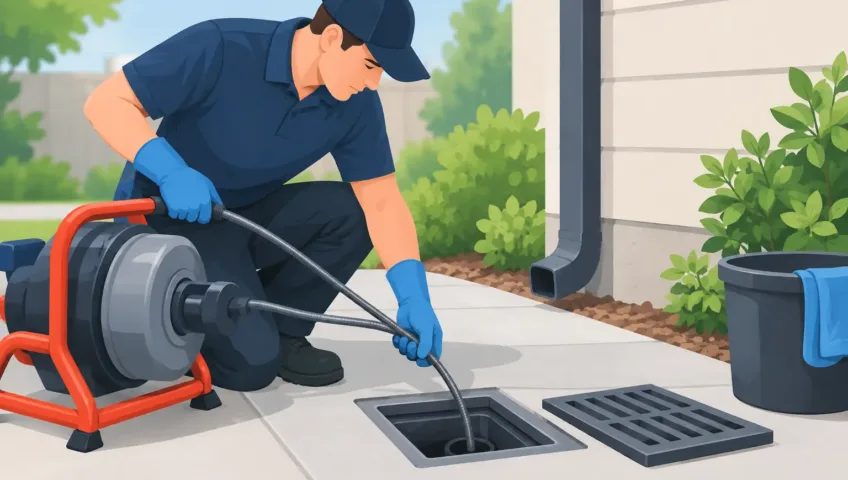
A trained drainage engineer can use professional rodding, high-pressure water jetting and CCTV drain survey equipment to locate the cause without guesswork. A camera survey is particularly useful where blockages return, because it can show whether roots, fractures, displaced joints or scale are affecting the pipe.
Why outside drains block in the first place
Rainwater gullies are exposed to everything the weather brings. Autumn leaves, soil washed from flower beds, gravel, roof moss and litter can gather at the trap until water has nowhere to go. Keeping gullies clear is particularly worthwhile before heavy rain, when a small obstruction can quickly turn into standing water around the property.
Foul drains have different enemies. Cooking fat, wet wipes, sanitary products, excess toilet paper and non-flushable items can catch inside pipework and form a stubborn blockage. Even products labelled as flushable can cause trouble once they meet grease, scale or tree roots in older drains.
Tree roots deserve a mention because they are often misunderstood. Roots do not usually break a sound pipe from scratch. Instead, they find existing gaps at joints or cracks, then grow towards the moisture inside. Once established, they trap debris and lead to recurring blockages. Clearing the roots may restore flow, but the underlying defect may need repair to prevent their return.
Preventing another blocked outside drain
A little routine attention is cheaper and far less stressful than an emergency. Check gully grates every few weeks during autumn and after storms. Sweep leaves away from the surrounding surface, clear roof gutters before debris reaches the downpipe, and keep soil, bark and loose gravel from washing towards drains.
Inside the property, keep fat, food scraps, wipes and sanitary items out of sinks and toilets. If you manage a rental property or business, make this clear to tenants, staff and customers where relevant. Busy kitchens and shared facilities can block quickly when nobody knows what the drainage system can handle.
If your property has a history of drainage issues, planned cleaning and a CCTV survey can be more practical than waiting for the next overflow. This is especially true for older properties, sites with large trees, restaurants and premises with frequent public use.
Get help before the overflow spreads
A straightforward gully blockage may be something you can clear with gloves, patience and a bucket. But if the drain is full, foul-smelling, overflowing or repeatedly blocking, the safest move is to stop using water where possible and arrange a professional inspection.
Absolute Drainage provides urgent drain unblocking for homes and businesses, with trained engineers available around the clock and clear explanations before work begins. No job is too small, and catching a drainage issue early can spare you the damage, disruption and clean-up that comes with an overflowing outside drain.