
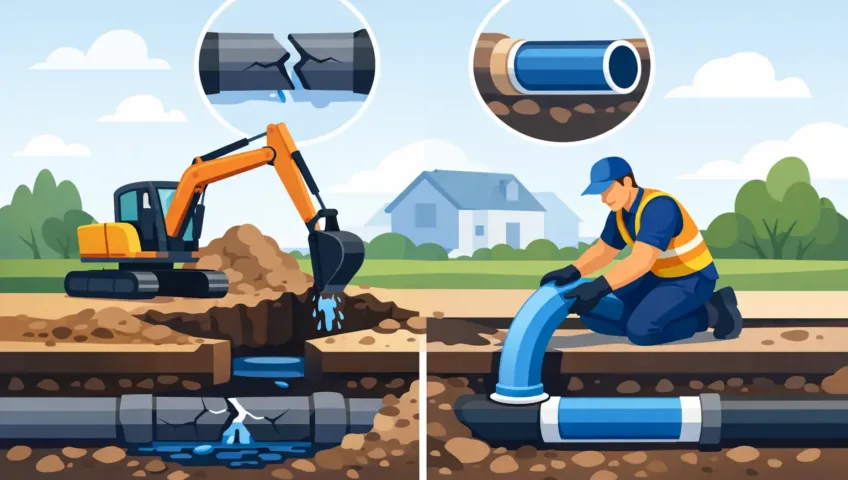
A cracked drain beneath a patio, driveway or shop floor can sound like a major building project. It does not always have to be. No dig drain repair can restore many damaged underground pipes from the inside, avoiding the upheaval of digging through carefully laid paving, landscaped gardens or a busy commercial site.
The key word is “many”. Drain lining is an excellent solution in the right conditions, but it is not a cure for every fault. A proper CCTV drain survey should come first, so you know exactly what has failed and why. Don’t panic – a trained drainage engineer can explain the footage clearly, recommend the sensible repair and give you a fair price before work begins.
What is no dig drain repair?
No dig drain repair, also known as trenchless drain repair or drain lining, repairs a pipe without excavating along its full length. Rather than exposing and replacing the damaged drain from above, an engineer accesses the pipe through an existing manhole or suitable entry point.
After cleaning the drain, they install a resin-soaked liner inside the damaged section. The liner is positioned precisely and inflated or calibrated so it sits tightly against the original pipe wall. Once the resin has cured, it forms a strong, smooth new pipe within the old one.
This new lining seals cracks, displaced joints and small holes that may be allowing wastewater to escape or tree roots to enter. It can also bridge areas weakened by age, ground movement or corrosion. The drain remains in use, but with a renewed internal surface designed to protect it for years to come.
For a smaller, localised defect, a patch liner may be the better option. This treats the faulty section only, rather than lining a longer run of pipe. It is often a practical choice where CCTV footage shows one clear crack or a single root entry point.
When drain lining is a good fit
No-dig methods are particularly useful when the pipe sits beneath something you would rather not disturb. That might be a block-paved drive, a conservatory, a kitchen extension, established planting or the floor of a restaurant that needs to keep trading.
It is also a strong option for landlords and property managers dealing with recurring issues in occupied properties. Repeated blockages, unpleasant smells, damp ground around an external drain or roots returning after every clearance can all point to a structural fault. Clearing the blockage gets things moving temporarily, but lining can deal with the opening that lets the problem come back.
For commercial premises, reduced disruption can be just as valuable as the repair itself. Excavation may mean cordoning off access, lifting flooring, managing dust and noise, or scheduling work outside trading hours. No dig repair can often be completed with a smaller work area and far less mess.
That said, the condition of the existing pipe matters. The old drain needs to retain enough shape and stability to support a liner. This is why an honest survey is essential. A quick guess from above ground is not a reliable way to choose a repair method.
How the repair is carried out
The job normally starts with a CCTV drain survey. A camera is fed through the pipe to locate defects, assess their severity and measure the affected section. The engineer can identify whether the issue is cracking, root ingress, joint displacement, corrosion, a collapse or a blockage hiding a more serious problem.
The drain is then cleaned thoroughly, usually with high-pressure water jetting. Any roots, scale, grease, loose debris or obstructions need to be removed so the liner can bond correctly. Skipping this stage is not an option. A lining repair is only as good as the preparation underneath it.
Once the pipe is clean and measured, the chosen liner is installed through an access point. Depending on the repair, it is cured with ambient conditions, hot water, steam or UV equipment. The engineer then carries out a final CCTV inspection to check that the liner is seated properly, the pipe is open and the defect has been sealed.
A professional team should leave you knowing what has been repaired, where it is, and what warranty applies. If the footage reveals separate faults elsewhere in the system, those should be explained clearly rather than bundled into work you did not ask for.
What no dig drain repair can and cannot fix
Drain lining is highly effective for cracks, leaking joints, root intrusion, minor displacement and worn pipe interiors. It is often suitable for clay, cast iron, concrete and some plastic drainage pipes, subject to the survey findings.
However, excavation is sometimes the safer and more durable answer. If a pipe has fully collapsed, is badly crushed, has a severe change in level or has lost its route due to major ground movement, a liner may not be able to restore it properly. The same applies where there is no viable access for the equipment or where a damaged connection needs rebuilding.
There is also a practical point around diameter. A liner slightly reduces the internal width of the pipe. In most domestic drains this is not an issue, but an engineer should consider capacity carefully in systems that already have poor falls, heavy commercial use or a history of slow running.
Be wary of anyone promising that trenchless repair is always cheaper or always possible. It depends on the depth of the drain, the damage, access, pipe size and how much surface would otherwise need lifting. The best repair is the one that fixes the actual fault without creating another problem later.
Why diagnosis matters before you spend money
A drain that blocks once may simply need clearing. A drain that blocks in the same place repeatedly is telling you something. Grease build-up, wipes, sanitary products and foreign objects are common causes, but so are roots growing through open joints and sections of pipe that have dropped out of line.
CCTV footage takes the uncertainty out of the decision. It helps separate a maintenance issue from a repair issue, and it gives homeowners, landlords and facilities managers useful evidence of what is below ground. For insurance discussions or planned property works, that record can be particularly helpful.
It is worth checking responsibility too. Drains within your boundary are not always your responsibility, and some shared sewers may be maintained by the local water company. The exact position can vary, so an engineer can help identify where the fault lies before you authorise unnecessary private work.
Keeping a repaired drain in good condition
A new liner protects the damaged section, but it cannot prevent every future blockage. Avoid flushing wipes, cotton buds, nappies or cooking fat, even when packaging claims an item is flushable. In commercial kitchens, regular grease management and planned jetting are far less disruptive than waiting for a backed-up drain during service.
Properties with mature trees may benefit from periodic CCTV checks, especially if roots have caused problems before. Root cutting can clear the pipe, but it does not permanently seal an open joint unless that joint is repaired. This is one reason no-dig lining can be a better long-term answer than repeated call-outs for the same issue.
For septic systems and properties with older drainage, scheduled maintenance also helps spot changes before they become flooding, odours or a drainage emergency. A small defect is usually easier to manage than a failure discovered after sewage has backed up into the property.
Get clear advice before your garden or floor is dug up
If you have recurring blockages, unexplained smells, wet patches or CCTV evidence of a cracked pipe, ask whether no-dig repair is suitable before agreeing to excavation. Absolute Drainage can survey the system, show you what is happening underground and talk you through the practical options without jargon.
If wastewater is rising, a toilet is backing up or a commercial drain is affecting safe operation, treat it as urgent. Get the blockage controlled first, then make sure the underlying cause is properly investigated. The right repair should leave you with a working drain and as little disruption to your property as possible.