
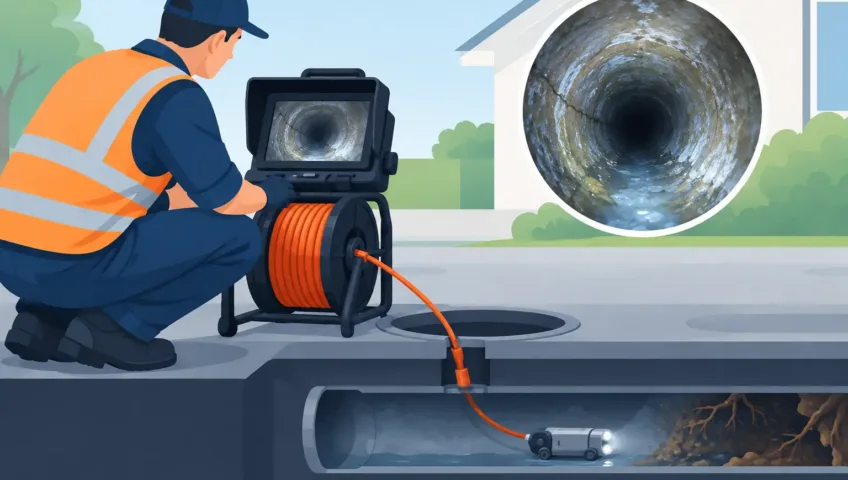
A drain can be out of sight, but it should not be out of control. If you have repeat blockages, foul smells, slow-running toilets or sinks, damp patches outside, or water backing up around a gully, CCTV surveys can show what is happening beneath the surface. Rather than guessing or digging up a garden, driveway or business premises, an engineer can inspect the pipework from the inside and explain the findings clearly.
For homeowners, landlords and businesses, that means less disruption and a better basis for deciding what to do next. Sometimes the answer is a straightforward clean. Sometimes there is damage that needs attention before it becomes a much larger and more expensive problem.
What is a CCTV drain survey?
A CCTV drain survey is an internal inspection of your drainage pipes using a specialist waterproof camera. The camera is fed into the drain and sends live footage back to the engineer, allowing them to see the condition of the pipe, identify defects and locate the cause of a blockage or recurring issue.
The equipment can travel through drains that cannot be properly inspected from above. It is particularly useful where a problem keeps returning after unblocking, or where there is no obvious explanation for poor drainage. The survey may identify a build-up of fat, grease, wipes or scale, but it can also reveal cracked pipes, displaced joints, root ingress, collapsed sections and badly installed drainage.
This is not just a case of putting a camera down a pipe and hoping for the best. A good survey combines the footage with the engineer’s drainage knowledge. You should be told what has been found, where it is located, how urgent it is and whether cleaning, monitoring, repair or replacement is the sensible option.
When CCTV surveys are worth arranging
A one-off blocked sink or toilet often clears with professional drain unblocking. However, when the same drain blocks again, there is usually a reason. Repeated jetting without finding that reason can become frustrating and costly.
CCTV surveys are especially useful after recurring blockages, flooding, rodent activity, persistent unpleasant odours or unexplained wet ground. They are also a sensible precaution before buying a property, completing building work or taking on a commercial lease. Old clay drains, shared drainage runs and pipework beneath extensions can all hide faults that are not visible from inside the building.
For landlords and property managers, a survey can provide useful evidence when deciding who is responsible for a drainage issue. In commercial settings, it can help protect trading hours. A restaurant with recurring kitchen drainage problems, for example, may have grease deposits, damaged pipework or an incorrectly connected line. Finding the cause early is far preferable to dealing with a closure, a flooded kitchen or an unhappy customer during service.
What the camera can find
Drainage faults come in many forms, and the right solution depends on what the footage shows. A blockage caused by excessive toilet paper or wipes calls for a different response from a drain with a fractured pipe or roots growing through a joint.
Common findings include:
- fat, grease, scale, silt and other debris restricting the pipe
- tree roots entering through cracked or open joints
- cracks, fractures and collapsed pipe sections
- displaced joints that catch waste and allow water to escape
- pipework that has sagged, creating a low point where waste collects
- poor connections, redundant pipework or building debris left in the drain
- rodent access points and signs of a damaged drainage route
Not every mark on a drain requires immediate excavation. Small surface wear in an older pipe may simply need watching, while a crack that is allowing roots in is likely to worsen. The value of a survey is that it separates the urgent faults from the manageable ones, so you are not pushed into work you do not need.
What happens during a drain survey?
The engineer will first assess access points such as manholes, inspection chambers and rodding points. If the drain is blocked, it may need clearing before the camera can travel through and produce useful footage. High-pressure water jetting is often used to remove debris and restore flow before the inspection begins.
The camera is then guided through the drainage run. The engineer watches the live feed and records significant defects, while specialist locating equipment can help identify the position and depth of an issue above ground. This matters when a repair is needed, as it avoids digging in the wrong place.
Once the inspection is complete, you should receive a plain English explanation of the results. If a report is required for a property purchase, insurance matter, landlord file or planned repair, ask for this when booking. The level of reporting can vary depending on why the survey is being carried out, so it is worth being clear about what you need from the start.
The next step might not be digging
Many people hear the word “drain repair” and picture a driveway being dug up for days. That is sometimes necessary, particularly where a pipe has fully collapsed or is severely misaligned. But it is not the only option.
Where the existing pipe has enough structural strength, no-dig repair methods may be suitable. Drain lining can create a new lining within the damaged pipe, sealing cracks and joints with far less disruption than excavation. Patch repairs can also be used for localised faults. The right choice depends on the pipe material, the extent of damage, the location of the defect and whether the drain can be cleaned and prepared properly.
If the camera finds a straightforward build-up, professional cleaning may be all that is needed. For a commercial property, a planned cleaning schedule can then help prevent the problem from returning. There is little value in repairing a pipe if the same habits or waste build-up will immediately put it under pressure again.
How much do CCTV drain surveys cost?
The cost depends on the size and complexity of the drainage system, the access available and whether clearing is needed before the inspection. A short survey of a domestic drain is very different from tracing an issue through a large commercial site with several chambers, long pipe runs and restricted access.
It is worth asking what is included in the price. Does it cover drain clearance first, recorded footage, a written report, locating the defect, or recommendations for repair? A clear quote helps prevent surprises and makes it easier to compare like for like.
Be cautious about anyone who diagnoses a major underground repair without showing you the evidence or explaining the alternatives. A trustworthy drainage engineer should be able to talk you through the footage and give practical advice. If urgent work is required, you should understand why it is urgent and what can happen if it is delayed.
A survey can prevent a bigger emergency
Drainage problems rarely improve by being ignored. A small crack can admit roots. A partial restriction can turn into a full blockage. A damaged pipe leaking beneath a path, car park or property can eventually cause much more disruption than an early repair would have done.
That does not mean every slow drain needs a camera inspection straight away. If a simple blockage has a clear cause and clears fully, monitoring it may be reasonable. But when the issue returns, affects more than one fixture or creates smells, flooding or visible ground changes, a CCTV survey is a sensible way to stop guessing.
At Absolute Drainage, our trained engineers use modern survey equipment to identify faults with minimum fuss and explain the options before work begins. Whether you need urgent help with a blocked drain or want reassurance about a property’s pipework, acting early can keep a hidden fault from becoming the job that ruins your week.